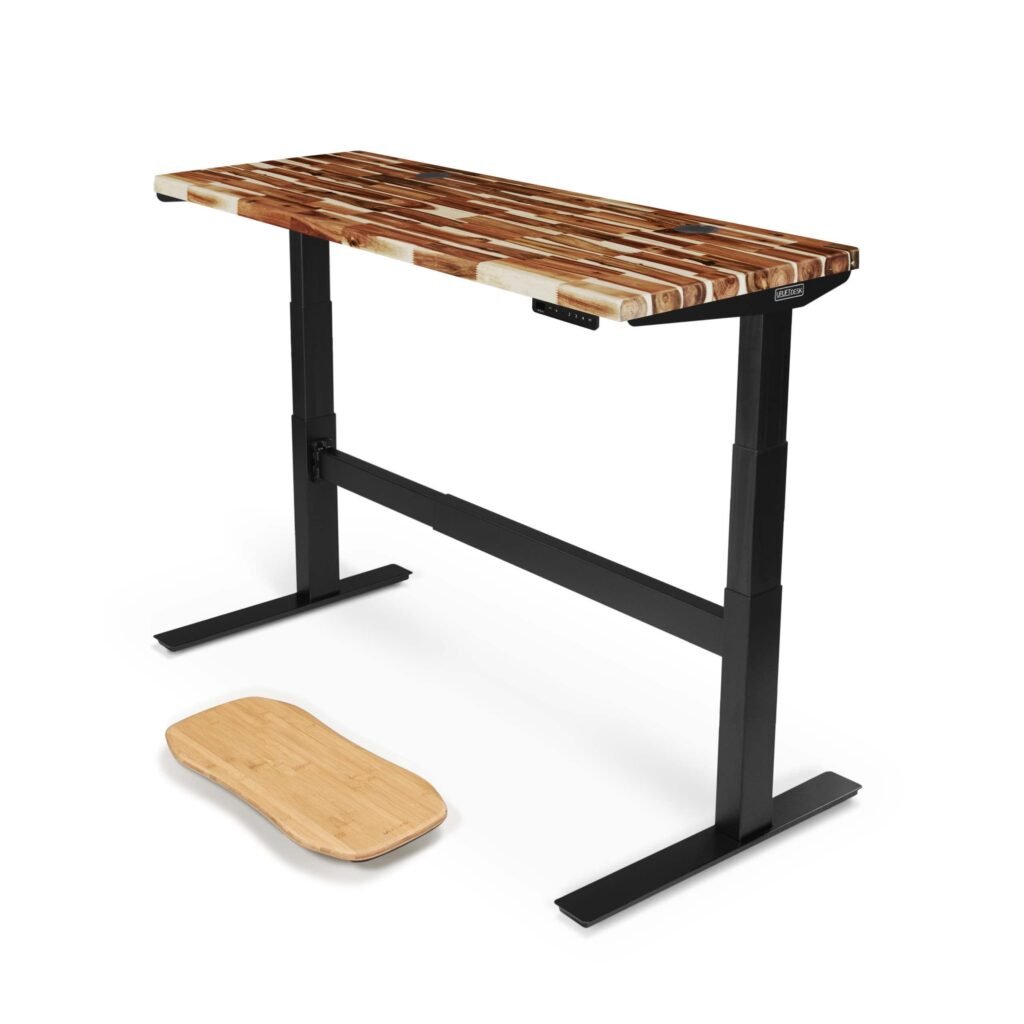
Standing Desk vs Sitting Desk: Complete Comparison Guide for Your Home Office
The choice between a standing desk and a traditional sitting desk has become one of the most debated decisions for anyone setting up their home office. With remote work now a permanent fixture for millions of professionals, this isn’t just about furniture—it’s about your health, productivity, and long-term well-being.
While both options have passionate advocates, the reality is more nuanced than the marketing claims suggest. Traditional sitting desks offer proven comfort and focus for deep work, while standing desks promise better posture and energy levels. The question isn’t which is universally better, but which aligns with your specific work style, health concerns, and budget.
This comparison will help you understand the real-world tradeoffs between these two approaches, cutting through the hype to examine what actually matters for your daily work experience.
Side-by-Side Comparison
| Feature | Standing Desk | Traditional Sitting Desk |
|---|---|---|
| Initial Cost | $300-$1,200+ | $100-$600 |
| Health Impact | Reduces sitting time, may improve posture | Comfortable for long sessions, proven ergonomics |
| Productivity | May boost energy, potential learning curve | Established comfort, minimal adjustment |
| Adjustability | Height adjustable, sit/stand flexibility | Fixed height, chair adjustability |
| Space Requirements | Similar footprint, may need anti-fatigue mat | Standard footprint |
| Setup Complexity | Moderate (electric models) to simple (manual) | Minimal |
| Long-term Durability | Moving parts may wear, 3-10 year lifespan | Simple construction, 10+ year lifespan |
| Accessories Needed | Anti-fatigue mat, monitor arm potentially | Quality ergonomic chair essential |
Build Quality and Durability
When examining long-term reliability, traditional sitting desks hold a clear advantage. Their simple, static construction means fewer failure points and longer lifespans. A well-built wooden or steel desk can easily last decades with minimal maintenance.
Standing desks, particularly electric models, introduce mechanical complexity that affects durability. The UPLIFT V2 Standing Desk represents the premium end of the market with robust dual-motor systems, but even high-quality units typically see component wear after 3-5 years of regular use. Manual crank standing desks like the IKEA Bekant Sit/Stand Desk offer better longevity by eliminating motors, though they sacrifice convenience.
The weight capacity also differs significantly. Traditional desks can often support 150-200 pounds without issue, while standing desks typically max out at 120-150 pounds due to their adjustable mechanisms. If you’re planning a multi-monitor setup or frequently work with heavy equipment, this limitation becomes critical.
However, standing desk quality has improved dramatically. Premium models now offer 10-year warranties on frames and 3-year warranties on electronic components, suggesting manufacturers have confidence in their durability improvements.
Ergonomics and Health Impact
The ergonomic equation is more complex than standing desk advocates often suggest. Traditional sitting desks, when paired with a quality ergonomic chair like the Herman Miller Aeron Chair, can provide excellent postural support for extended periods. The key is proper setup: monitor at eye level, feet flat on the floor, and arms parallel to the ground.
Standing desks address the well-documented health risks of prolonged sitting—increased cardiovascular disease risk, back pain, and metabolic issues. However, standing all day creates its own problems: leg fatigue, varicose veins, and potential lower back strain. The optimal approach involves alternating between sitting and standing throughout the day.
Research suggests the sweet spot is standing for 15-30 minutes every hour, rather than standing continuously. This makes sit-stand desks more valuable than fixed-height standing desks for most users. The Flexispot E7 Standing Desk exemplifies this approach with memory presets that make transitions seamless.
For users with specific health conditions like chronic back pain, standing desks often provide relief by allowing position changes. However, those with knee problems, circulation issues, or foot conditions may find prolonged standing problematic.
Productivity and Focus Considerations
Traditional sitting desks excel for deep, focused work. The stable, comfortable position allows for hours of concentration without physical distraction. This makes them ideal for tasks requiring sustained attention: writing, coding, detailed analysis, or creative work.
Standing desks can boost energy and alertness, particularly during afternoon energy dips. Many users report feeling more engaged and less likely to experience post-lunch fatigue. However, the initial adjustment period typically sees a temporary productivity decrease as users adapt to working while standing.
The type of work matters significantly. Standing works well for:
- Video calls and presentations
- Brainstorming and creative thinking
- Administrative tasks and email
- Short bursts of focused work
Sitting remains superior for:
- Extended writing or coding sessions
- Detailed design work
- Complex problem-solving requiring sustained concentration
- Tasks involving frequent note-taking
The Varidesk ProDesk 60 Electric addresses this by making position changes effortless, allowing users to match their posture to their task.
Value for Money Analysis
Traditional sitting desks offer superior value for budget-conscious buyers. A solid wood or steel desk can be found for $150-$300 and will serve reliably for years. The IKEA Karlby Desk exemplifies this value proposition, offering substantial workspace and durability at a fraction of standing desk costs.
Standing desks require significantly higher upfront investment. Quality electric models start around $400 and can exceed $1,000 for premium features. Manual options like the Uplift V2 Manual Standing Desk reduce costs but sacrifice convenience.
The total cost of ownership includes accessories. Standing desk users typically need anti-fatigue mats ($50-$150), while sitting desk users need quality ergonomic chairs ($300-$1,000+). When factoring in a premium ergonomic chair, the total investment often favors standing desks.
Consider the potential health benefits in your value calculation. If a standing desk prevents back problems that would otherwise require physical therapy or medical intervention, the health ROI becomes compelling. However, these benefits aren’t guaranteed and vary significantly between individuals.
Who Should Buy What
Choose a Traditional Sitting Desk if:
- You’re on a tight budget (under $500 total setup)
- Your work involves 6+ hours of deep focus daily
- You have knee, foot, or circulation issues that make standing uncomfortable
- You’re satisfied with your current activity levels and have no back pain
- You do detailed work requiring steady hands (design, precision tasks)
- Your workspace is shared or temporary
Choose a Standing Desk if:
- You experience back pain or stiffness from prolonged sitting
- Your work involves varied tasks throughout the day
- You want to reduce overall sitting time for health reasons
- You have the budget for a quality electric model ($500+)
- You frequently take video calls or do presentations
- You’re motivated to change ingrained sitting habits
Consider a Desk Converter if:
- You want to try standing without full commitment
- You’re renting or can’t replace existing furniture
- Budget is extremely tight but you want standing options
- You need a temporary solution while researching permanent options
The Flexispot M2B Standing Desk Converter represents a middle-ground approach, allowing you to test the standing desk concept without full replacement.
The Verdict
Neither standing desks nor traditional sitting desks are universally superior—the best choice depends on your specific situation, budget, and work requirements.
Standing desks win for: health-conscious users willing to invest in behavioral change, those with existing back problems, and workers whose tasks vary throughout the day. The sit-stand flexibility of quality electric models like the Uplift V2 Commercial Standing Desk provides the best of both worlds.
Traditional sitting desks remain optimal for: budget-conscious buyers, users who do extended focused work, and those satisfied with their current ergonomic setup. When paired with a quality chair and proper ergonomic accessories, they provide proven comfort and productivity.
The research increasingly supports a hybrid approach: alternating between sitting and standing throughout the day rather than committing to either position exclusively. If budget allows, an electric sit-stand desk offers the flexibility to adapt your workspace to your immediate needs and long-term health goals.
For most users, the question isn’t standing versus sitting, but rather finding the right balance between both positions while maintaining proper ergonomics regardless of your choice.
As an Amazon Associate I earn from qualifying purchases. This post contains affiliate links. If you purchase through these links, we may earn a commission at no extra cost to you.